Tukwila Surveys

TRU is conducting a project in order to better understand the issues affecting Tukwila workers and residents. Do you live or work in Tukwila, or have friends or family who do? Invite them to take our 5-minute survey:

For Tukwila workers: bit.ly/tukwila-jobs

For Tukwila residents: bit.ly/tukwila-resident

TRU 2021 General Election Endorsements

Here is who we recommend voting for in the 2021 General Election:

King County

  • Executive – Joe Nguyen
  • District 3 – Sarah Perry
  • District 5 – Shukri Olow

Seattle

  • Mayor – Lorena González
  • Position 8 – Teresa Mosqueda
  • Position 9 – Nikkita Oliver
  • City Attorney – Nicole Thomas-Kennedy

Port of Seattle

  • Position 1 – Ryan Calkins
  • Position 3 – Hamdi Mohamed
  • Position 5 – Toshiko Grace Hasegawa

Bellevue

  • Position 4 – Ruth Lipscomb

Bothell

  • Position 1 – Han Tran

Burien

  • Position 1 – Hugo Garcia
  • Position 5 – Sarah Moore
  • Position 7 – Krystal Marx

Kenmore

  • Position 4 – Nigel Herbig

Kent

  • Mayor – Dawn Bennett
  • Position 2 – Satwinder Kaur
  • Position 4 – Cliff Cawthon
  • Position 6 – Brenda Fincher

Kirkland

  • Kirkland City Council Position 5 – Neal Black

Issaquah

  • Position 3 – Barbara de Michele

Renton

  • Position 1 – Joe Todd
  • Position 2 – Carmen Rivera

Tukwila

  • Position 1 – Tosh Sharp

Federal Way

  • Position 4 – Katherine Festa

Lake Forest Park

  • Position 3 – Stephanie Angelis

SeaTac

  • Position 2 – Jake Simpson
  • Position 4 – Mohamed Egal
  • Position 6 – Iris Guzmán

Port of Edmonds

  • Commissioner-at-Large Position 5 – Scott Marshall

We did it!!! King County Council passes renter protections

On Tuesday afternoon, after hours of public comment & debate, the King County Council voted 6-3 to pass a pathbreaking package of renter protections, including:

  • ALL renters are protected from eviction or lease termination without a “just cause.”
  • Move-in fees are capped at 1-month rent & renters can pay in installments.
  • Late fees are capped at 1.5% of monthly rent.
  • For rent increases greater than 3%, landlords must give 120 days notice.
  • Renters on fixed incomes can change their rent due date.
  • You don’t need a Social Security Number to apply for a rental home.

This legislation will protect renters in unincorporated areas of King County like Skyway and White Center, home to historically underserved Black and brown and low-income communities. It also creates a high standard that we can now work to match in cities around the county! Read more in The Stranger and The Seattle Times.

This major victory wouldn’t have been possible without sustained pressure from the Stay Housed Stay Healthy coalition & from all the TRU members and allies who sent emails, made phone calls, testified at council meetings and amplified our message on social media. THANK YOU!!! Together we make progress!!!

Stay Housed Stay Healthy: Renters Making Progress!

Our Stay Housed Stay Healthy campaign for stronger renter protections is rocking it! With energetic pressure and support from renters, TRU members and so many allies in this powerful county-wide coalition, elected officials have approved a suite of renter protections this month:

June 7: Seattle City Council passed legislation closing the “lease loophole” in Seattle’s Just Cause Eviction Ordinance; creating a defense to eviction for COVID rental debt; and banning school year evictions of families and educators.

June 14: Kenmore City Council passed a local moratorium on evictions and rent increases through Sept. 30; a defense to eviction for COVID rental debt and for renters with rental assistance applications in progress; and a requirement that landlords certify that they have applied for rental assistance before initiating an eviction.

June 15: Kirkland City Council passed a local moratorium on evictions through Sept. 30.

June 18: Seattle Mayor Jenny Durkan extended Seattle’s moratorium on evictions and rent increases through Sept. 30.

June 21: Burien City Council passed a local moratorium on evictions through Sept. 30.

And we’re not done yet! Stay tuned for news of King County Council’s permanent renter protections package, up for a vote on Tuesday, June 29.

TRU’s 2021 Primary Endorsements

At TRU’s membership meeting last week, we debated and voted on endorsements for the 2021 Primary Elections, considering races throughout King County. (Not every candidate we endorsed will appear on the primary ballot; in races where there are only two candidates, there is no vote until November.) Here is who we recommend:

King County

  • Executive – Joe Nguyen
  • District 3 – Sarah Perry
  • District 5 – Shukri Olow
  • District 7 – Saudia J. Abdullah
  • District 9 – Ubax Gardheere

Seattle

  • Position 8 – Teresa Mosqueda
  • Position 9 – Nikkita Oliver
  • Mayor – Andrew Grant Houston
  • City Attorney – Nicole Thomas-Kennedy

Port of Seattle

  • Position 1 – Ryan Calkins
  • Position 3 – Hamdi Mohamed
  • Position 5 – Toshiko Grace Hasegawa

Bothell

  • Bothell City Council Position 1 – Han Tran

Burien

  • Position 1 – Hugo Garcia
  • Position 7 – Krystal Marx

Kenmore

  • Position 4 – Nigel Herbig

Kent

  • Mayor – Dawn Bennett
  • Position 2 – Satwinder Kaur
  • Position 4 – Cliff Cawthon
  • Position 6 – Brenda Fincher

Kirkland

  • Kirkland City Council Position 5 – Neal Black

Issaquah

  • Position 3 – Barbara de Michele

Renton

  • Position 1 – Joe Todd
  • Position 2 – Carmen Rivera

Tukwila

  • Position 1 – Tosh Sharp

Federal Way

  • Position 4 – Katherine Festa

Lake Forest Park

  • Position 3 – Stephanie Angelis

SeaTac

  • Position 2 – Jake Simpson
  • Position 4 – Mohamed Egal
  • Position 6 – Iris Guzmán

Port of Edmonds

  • Commissioner-at-Large Position 5 – Scott Marshall

Why we’re challenging “Compassion Seattle”

Yesterday, TRU joined with Real Change, Nickelsville and Be:Seattle to file a petition challenging the ballot title for the “Compassion Seattle” campaign’s proposed amendment to the city charter.

For our neighbors experiencing homelessness, the COVID-19 pandemic has been a crisis on top of a crisis. Indoor public spaces and public restrooms closed their doors. Many free meal programs and other services shut down. Shelters struggled to keep people distanced and safe from COVID. Meanwhile, there’s still a severe shortage of deeply affordable housing. And many homeless or housing insecure people lost jobs. So more people are sleeping outside. Not because they want to, but because there aren’t better options.

TRU members and friends have stepped up to do what we can and offer solidarity— our steadfast volunteer outreach team visits camps every week bringing home-cooked food, water, essential supplies and items people ask for. (You can donate here!)

We know the real solutions are systemic: First and foremost, deeply affordable housing. And until there’s enough housing, shelter that meets people’s needs, including keeping families and couples together, accommodating pets, having secure storage for people’s belongings, and offering both privacy and community. And whatever other services and supports people need— which also means paying human service workers a living wage.

There’s no mystery to ending homelessness. It requires acknowledging the scale of the crisis and coming up with the resources to truly address it, as multiple McKinsey reports have shown. We took a big step last year with the passage of Jumpstart Seattle, a pathbreaking tax on large corporations that, starting next year, will fund new affordable housing. The big business lobby groups hate the tax and the Seattle Metropolitan Chamber of Commerce is suing the city to try to overturn it. What jerks.

This year, those same lobby groups teamed up with former Seattle City Councilmember Tim Burgess to launch “Compassion Seattle.” They’re tired of seeing the tents lining the downtown business district. This initiative began as an attempt to codify sweeps in the city charter, which is a foundational document, like the constitution of the city.

Their initial language was really, really bad. But they realized they weren’t going to get far without the legitimation of service providers and homelessness “experts.” So they allowed some service providers to have input, and after a number of revisions, the final language is much less bad than it was. Reading it, you might even think it sounds good: The initiative directs the city to create 2,000 units of “housing” (permanent or emergency) within a year, with services including mental health & drug treatment; and it says the city should keep public spaces clear but balance this with the harm done to people by clearing encampments. And now, the whole thing “sunsets” (expires) after six years.

But here’s one major catch: No new funding is identified for all this work. In fact, the campaign claims that none is needed. Last week in Crosscut, TRU’s general secretary Katie Wilson thoroughly debunked this ridiculous claim.

And here’s another catch: While the measure promises “housing,” creating permanent housing in one year is a tall order, so whatever the city does cobble together will likely be “emergency housing,” a.k.a shelter— and as the city scrambles to fulfill the mandate, it might even pull funds away from creating permanent housing.

The ballot title— what voters will read on their ballot in November, if the campaign gathers enough signatures— is extremely misleading, claiming that this measure will create housing and services and keep public space clear of encampments. We’re challenging this title because voters deserve to know the truth. Amending the city charter is not the right way to make policy, and it’s not going to solve our homelessness crisis.

What can begin to solve the crisis? Listening to homeless people, who are experts on their own situations. Supporting grassroots homeless organizations like WHEEL, SHARE and Nickelsville. Actually creating more housing! Addressing the deep underlying causes of the homelessness crisis, including a profit-driven housing market, systemic racism, and decades of neoliberal policies. Being honest about the scale of the homelessness crisis and serious about coming up with the resources needed to address it. And electing a new Mayor who will lead on these issues, rather than just sweep, sweep, sweep.

TRU will continue to push for real answers. And we’ll call out the fake ones. Join us!

Stay Housed, Stay Healthy Campaign Launch: March 29

Check out this recording of our launch event for the Stay Housed, Stay Healthy campaign which took place on Monday, March 29!

We’re fighting to ensure renters can be stable during and after the pandemic, so that our community doesn’t need to face a landslide of evictions after moratoriums are lifted. We’ll be pushing strong tenant protections including a Just Cause law through the King County Council, and to strengthen Seattle tenant protections as well. At the launch we heard from renters who are struggling with rental debt and the threat of eviction, and also from special guests King County Councilmembers Girmay Zahilay and Jeanne Kohl-Welles and Seattle City Councilmembers Tammy Morales and Kshama Sawant.

Extend the Eviction Moratoriums!

Seattle’s eviction moratorium expires March 31. If we let this happen, a mass wave of evictions could increase homelessness and contribute to a new spike in COVID-19. This week in Crosscut, TRU’s Katie Wilson wrote about why the city & state eviction moratoriums must be extended through the end of 2021. Read more here.

Rental assistance programs need time to work, and tenants need stability to get caught up on rent. Seattle’s moratorium also protects small businesses and nonprofits. Today, we sent a letter to Mayor Durkan signed by 47 organizations calling on her to extend the moratorium through the end of this year. Want to add your voice? Send Mayor Durkan an email here!

Taking on Big Tech: Amazon, Monopoly Power, Antitrust & Organizing for a People-Centered Economy

Concerns about Big Tech’s monopoly power are multiplying. Seattle-based corporate giant Amazon has accumulated enormous power over our economy and our lives. But what is a monopoly? What are the dangers of monopoly, and how are we impacted as residents, consumers, business owners and workers? And most importantly, what can we do about it?

On Thursday, Jan. 28, TRU was proud to co-host a teach-in with Puget Sound Sage, with special guests from the Washington State Attorney General’s Office Antitrust Division, to dig into these timely questions. We recorded the presentation portions of the event, which you can watch below.

Want to go deeper into the history and meaning of monopoly and antitrust? Check out this series on Amazon and antitrust in Crosscut by TRU’s general secretary Katie Wilson.

Do you know your Black transit history?

It’s Black History Month! We’re here to help you study up on your Black transit history. And while you’re here… How ‘bout a quick action to advance racial equity in transportation in our own day? Sign in PRO on House Bill 1301, to help us decriminalize fare non-payment. If this bill passes, Sound Transit can no longer tell us that state law forces them to rely on court-issued civil infractions when riders can’t pay. The deadline to complete this action is 2:30pm on Monday, Feb. 8.

The real Rosa Parks & the long history of Transportation Protest

“Over the years, I have been rebelling against second-class citizenship. It didn’t begin when I was arrested.”
“I don’t believe in gradualism, or that whatever is to be done for the better should take forever to do.”

The story of Rosa Parks and the Mongomery Bus Boycott you learned in school wasn’t just skewed, it was way less interesting than the reality. The New York Times breaks it down.

Rosa Parks’s act of civil disobedience is only the most famous in a long, long history of Black people protesting segregated transportation systems. This history goes back at least to Frederick Douglass, who along with a friend in 1841 refused to leave a train car reserved for white passengers in Massachusetts. Their action led to organizing that resulted in Congress passing the Civil Rights Act of 1875, which granted Black citizens equal rights in public accommodations— until it was overturned by the Supreme Court in 1883. Read more about the history of civil rights transportation protests here.

Safe Bus: Transit Mutual Aid

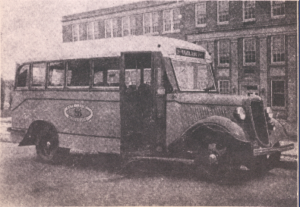
In 1926, in segregated Winston-Salem, NC, 13 Black jitney operators banded together and founded Safe Bus, a bus company to serve the Black neighborhoods where the privately-operated streetcars didn’t run. It grew to 75 employees and at one point was called the largest Black-owned transportation company in the world. In 1966, 20-year-old Priscilla Estelle Stephens became the first female driver for Safe Bus. Eventually, in 1972, the company was bought by the city and integrated into the public transit system.

The Real McCoy: Black ingenuity advancing transportation

Black inventors have left their mark on transportation history. Back in the 19th century, inventor & engineer Elijah McCoy, a child of escaped slaves, developed new lubricants for railroad steam engines. It may be apocryphal, but they say the superiority of his products led railroad engineers to ask for “The Real McCoy.”

Andrew Jackson Beard, a former slave who became a flour-mill owner and then an inventor, created a device that automatically joined railroad cars together, eliminating the need for a worker to stand between two cars to drop in a metal pin— a dangerous job that sometimes led to the worker being crushed.

Granville T. Woods, the first African American mechanical and electrical engineer after the Civil War and a prolific inventor, authored many transportation-related inventions— notably the Synchronous Multiplex Railway Telegraph, a device that allowed for communication between trains.

Garrett Augustus Morgan, a child of freed slaves, was a businessman, inventor and community leader. After witnessing a serious vehicle crash, he invented and patented one of the first three-signal traffic light systems in 1923.

Philadelphia Transportation Company strike: It ain’t all pretty

Labor unions have a complicated track record when it comes to race. Some unions have been staunchly anti-racist, all about forging multiracial solidarity. But at other times, white workers have banded together not just to fight the bosses, but to protect their privilege and their jobs from competition with Black workers. That happened, big-time, in Philadelphia during WWII.

The Philadelphia Transportation Company, which operated the city’s trolleys, buses and subways, employed Black workers as porters and tracklayers but refused to hire or promote them as drivers or conductors. Effective organizing by Black-led civic groups and churches led to the federal Fair Employment Practices Commission (FEPC) ordering the company to promote Black workers. 

But the white members of the Philadelphia Rapid Transit Employees Union were not pleased. They walked out and shut down the entire Philadelphia mass transit system for five days. The conflict spread to the streets where Black protesters retaliated against white-owned businesses, smashing windows and slashing police tires. The strike was ultimately broken by federal troops sent in by President Franklin Delano Roosevelt. Within a year, large numbers of Black workers had been promoted.